Surviving a Gunfight
1. Bring a gun. Preferably, bring at least two guns. Bring all of your friends who have guns.
2. Anything worth shooting is worth shooting twice. Ammo is cheap-life is expensive.
3. Only hits count. The only thing worse than a miss is a slow miss.
4. Someday someone may kill you with your own gun, but they should have to beat you to death with it because it is empty.
5. Always cheat, always win. The only unfair fight is the one you lose.
Blah blah blah.
Over the years firearms instructors have relied on cute little quips like these when a student asks how best to survive a gunfight. Without the experience needed to truly teach this subject (and very few have extensive first hand experience) the quips are accepted as truth in an atmosphere of mutual ignorance. These witticisms do hold seeds of truth, but they are intended to be entertaining, not informative, and they ignore several important truths.
Defensive firearms training has long been based on police training. The law enforcement base gives firearms training the credibility it needs for the marketplace. In truth, civilian self defense and law enforcement training could not be more different. Civilians do not have a need to apprehend criminals and stop crime. Civilians need only to avoid crime and survive another day with minimum injury and legal entanglements. This simple fact is often foreign to law enforcement oriented instructors. I'm going to revise some of these gunfighting witticisms, basing them on my own limited, but actual experience.
Rule #1 Don't Get Shot! When people get shot, they get hurt. When people get hurt, their survivability dwindles. With each bullet that enters their body, their ability to survive another minute evaporates. Not getting shot is the crux of the matter. The witticisms seem to accept the idea that a gunfight is unavoidable. In fact, the opposite is true. Many conflicts that end in death are avoidable. Therefore:
 Corollary #1 Don't get into gunfights! If you can avoid a gunfight, avoid it. People get killed in gunfights. They are not healthy environments to be in. The risk factors with lead flying past you are greater than the risk factors of most other endeavors. Compromise. Let the other guy win verbal challenges. Walk away with hoodlums heckling you. If you do not have to engage others in a lethal conflict, do not do so. It may be your last day on Earth, and you just don't know it yet. Luck plays a huge part in gunfights. A lifetime of building shooting skills of every type can be blown away with just a smidgen of luck, good or bad. Because you are right does not mean you will survive a gunfight. The goal in a gunfight is to survive, not to win, and not to prove you are right. People get the idea that being right is more important than being alive. It isn't. You can prove the veracity of your argument some other time, but not if you are dead. Avoid gunfights if at all possible.
Corollary #2 If you are getting shot at, make it to where you are NOT getting shot at. This may involve running away. There is no shame in running away from things that might kill you. Ferocious animals do this all the time. It is the instinct that allows grizzly bear cubs to become big bad ass grizzly bears, who may still chose to run away rather than become injured in an unnecessary fight. Distance is a target's best friend. A shooter's skill is negated by distance. The more an opponent has to chase and hunt, the quicker he will lose interest.
Movement is another great friend of a target. Perhaps one in ten shooters can consistently hit a laterally moving target. Being able to return accurate fire while on the move is important. Even a little lateral movement can negate most shooter's abilities. If you are able to return effective fire under these conditions, you will persevere.
If you are unable to return fire while moving, seek effective cover quickly. Cover is something that will stop bullets. Once you have cover, seek better cover farther away while remaining concealed. Concealment is often confused with cover. Concealment will not stop bullets. Concealment merely hides you for a few moments until you can find cover.
There are, of course, times when retreat is not an option. Under those circumstances, a choice must be made between an attack and an ambush. If escape is not an option, and a person is hidden with limited resources, the ambush is the better solution. A counter-attack should only be used when the ambush is not an option. The counter-attack is the one strategy that drastically lowers the defender's chances of survival. There are times that a counter-attack is necessary, but it is not the solution to all defensive problems.
That, in a nutshell, is what the gunfight witticisms ignore, and instructors seldom teach. Self preservation in a lethal encounter involves much more than simple marksmanship. People will pay money to attend shooting classes. Rarely will the same person pay money to attend classes on conflict resolution. It's a shame that these realities are glossed over with wisecracks masquerading as truth. A person's survival may someday depend on what they learned in a self defense class. If they possess the skills to blow holes in targets but do not know how to disengage and leave an escalating conflict, they may very quickly find their skills lacking in the realities off the firing range.
2. Anything worth shooting is worth shooting twice. Ammo is cheap-life is expensive.
3. Only hits count. The only thing worse than a miss is a slow miss.
4. Someday someone may kill you with your own gun, but they should have to beat you to death with it because it is empty.
5. Always cheat, always win. The only unfair fight is the one you lose.
Blah blah blah.
Over the years firearms instructors have relied on cute little quips like these when a student asks how best to survive a gunfight.
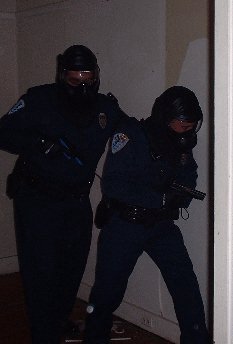 Without the experience needed to truly teach this subject (and very few have extensive first hand experience) the quips are accepted as truth in an atmosphere of mutual ignorance. These witticisms do hold seeds of truth, but they are intended to be entertaining, not informative, and they ignore several important truths.
 Defensive firearms training has long been based on police training. The law enforcement base gives firearms training the credibility it needs for the marketplace. In truth, civilian self defense and law enforcement training could not be more different. Civilians do not have a need to apprehend criminals and stop crime. Civilians need only to avoid crime and survive another day with minimum injury and legal entanglements. This simple fact is often foreign to law enforcement oriented instructors. I'm going to revise some of these gunfighting witticisms, basing them on my own limited, but actual experience.
Rule #1 Don't Get Shot! When people get shot, they get hurt. When people get hurt, their survivability dwindles. With each bullet that enters their body, their ability to survive another minute evaporates. Not getting shot is the crux of the matter. The witticisms seem to accept the idea that a gunfight is unavoidable. In fact, the opposite is true. Many conflicts that end in death are avoidable. Therefore:
 Corollary #1 Don't get into gunfights! If you can avoid a gunfight, avoid it. People get killed in gunfights. They are not healthy environments to be in. The risk factors with lead flying past you are greater than the risk factors of most other endeavors. Compromise. Let the other guy win verbal challenges. Walk away with hoodlums heckling you. If you do not have to engage others in a lethal conflict, do not do so. It may be your last day on Earth, and you just don't know it yet. Luck plays a huge part in gunfights. A lifetime of building shooting skills of every type can be blown away with just a smidgen of luck, good or bad. Because you are right does not mean you will survive a gunfight. The goal in a gunfight is to survive, not to win, and not to prove you are right. People get the idea that being right is more important than being alive. It isn't. You can prove the veracity of your argument some other time, but not if you are dead. Avoid gunfights if at all possible.
Corollary #2 If you are getting shot at, make it to where you are NOT getting shot at. This may involve running away. There is no shame in running away from things that might kill you.
 Ferocious animals do this all the time. It is the instinct that allows grizzly bear cubs to become big bad ass grizzly bears, who may still chose to run away rather than become injured in an unnecessary fight. Distance is a target's best friend. A shooter's skill is negated by distance. The more an opponent has to chase and hunt, the quicker he will lose interest.
 Movement is another great friend of a target. Perhaps one in ten shooters can consistently hit a laterally moving target. Being able to return accurate fire while on the move is important. Even a little lateral movement can negate most shooter's abilities. If you are able to return effective fire under these conditions, you will persevere.
If you are unable to return fire while moving, seek effective cover quickly. Cover is something that will stop bullets. Once you have cover, seek better cover farther away while remaining concealed. Concealment is often confused with cover. Concealment will not stop bullets. Concealment merely hides you for a few moments until you can find cover.
There are, of course, times when retreat is not an option. Under those circumstances, a choice must be made between an attack and an ambush. If escape is not an option, and a person is hidden with limited resources, the ambush is the better solution.
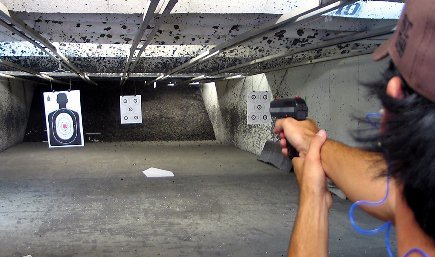 A counter-attack should only be used when the ambush is not an option. The counter-attack is the one strategy that drastically lowers the defender's chances of survival. There are times that a counter-attack is necessary, but it is not the solution to all defensive problems.
 That, in a nutshell, is what the gunfight witticisms ignore, and instructors seldom teach. Self preservation in a lethal encounter involves much more than simple marksmanship. People will pay money to attend shooting classes. Rarely will the same person pay money to attend classes on conflict resolution. It's a shame that these realities are glossed over with wisecracks masquerading as truth. A person's survival may someday depend on what they learned in a self defense class. If they possess the skills to blow holes in targets but do not know how to disengage and leave an escalating conflict, they may very quickly find their skills lacking in the realities off the firing range.
posted by Xavier at 4:37 PM


0 Comments:
Post a Comment
<< Home